Showing posts with label fetching. Show all posts

Monday, April 16, 2018

3 part cards

I had a little boy who needed to move.  I was a new guide, alone in my first classroom and desperate to keep him busy while still being able to pay attention to the other students. He also had an astonishing memory, I couldn’t believe how quickly he learned new vocabulary. So, trying to honor my training and follow his interests I made a set of classified cards of insects.

He loved them! But he couldn’t hardly sit still through a vocab lesson and quickly lost interest when I needed to step away with another student.

Big 'pushing' work

Enter fetching.

A simple exercise that swept through my classroom like wildfire and remains a favorite to this day! The children do it with me, an assistant, or best of all each other! One student spreads out the unlabeled cards at a table. The teacher or other students says “Bring me the Anklyosaurus”, showing the picture to match if the child isn’t sure what it is. When the first child brings it back they check that the cards match, then tuck them away in the pouches before going on to the next card. When all the cards are matched the game is over and the material is all ready to be put away.

3 part cards are the quintessential material to find online in droves. Seriously there are so many it’s overwhelming!  You can find cards for different vehicles, animals of all kinds, foods, etc. ; just about anything you’d like. I can’t imagine finding a Montessori classroom that doesn’t include these cards in some form. They’re easy to make (or cheap to buy) and are so versatile. Here’s a quick summary of the 3 part classified cards.

What are they?
The classified cards consist of printed pictures and the vocabulary that goes with them. In my AMI training the cards consisted of a single card with just the picture on it, a second card with the picture and word all in one piece, and a third card containing the picture that matched to a separate label. However for some reason EVERY set of cards I find online doesn’t have this second card. I wish I would have known to ask in my training why we actually created 4 pieces for what are called 3 part cards! Does anyone else know the reasoning behind it?


Why do we use them?
The purpose of the classified cards is to help children build up their vocabulary and help categorize objects. For example there may be set of vegetable cards and fruit cards in the classroom to help children begin to distinguish which items belong to each category.

How do we use them?
Traditionally the cards are presented in a three period lesson for the children, exploring to see which words they already know and which ones they can learn.  Here's a great summary of the Three Period Lesson. Above I explained how my first classroom evolved to have the cards be used mainly as a fetching/memory game.

After the students get better at the vocab it’s often fun to play the description/definition game. Spreading out the cards at a table or mat give some clues about which object you’re thinking about without using its name. Ex. “I’m thinking of something you might use to make a smoothie” “Blender!”

Tips for making the cards
IMG_0121
Note the pink color coding to
help keep this set from getting
 mixed up with other animal cards.

  1. Color code them!
    • Print the pictures on regular paper, then glue them to colored cardstock before laminating. So much easier than drawing dots on the back and it makes them sturdier too!
  2. Build a template
    • I made a template in Word that simply allowed me to find the pictures I needed, insert them and quickly type the words underneath. Using a template made it not only faster to create new sets of cards, but insured they were all the same size to fit in my pouches.
  3. Sew universal pouches
    • Ideally each set of cards has a pouch that shows what is inside (ex. fabric with different birds on it for bird cards) but let’s be honest and say that’s just not realistic. Years ago I invested in some fabric patterns that went nicely together, and made 5 sets of pouches that were identical and fit the cards sized in my template. Now when it’s time to rotate cards I can simply take the old ones out and put new ones in.
  4. Cut cards that are easy to tell apart
    • Like I said, I was taught to make 3 copies of the picture and a matching label so there are actually 4 parts. After having numerous spills and trying to sort of cards I realized I’d missed something obvious that would make my life easier. Rather than trimming the 3nd card to be a square to go with the label I left the space where the word should go. This make it so there was always room for the children to place the label, and made sorting easier. Simply sort the cards into big and little; then separate the big cards into those with words and those without. If you’re going to make cards the AMI way I really recommend using this trick to save yourself some headaches.
Have you found any other ways to use classified cards in the classroom or at home? Please share them with us!

Monday, March 9, 2015

Why should I do all the work?

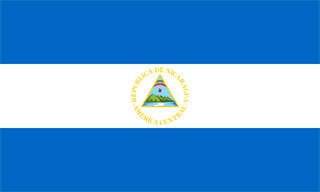
C loves fetching things. He loves matching. He loves the flags in our classroom. So it's not much of a jump to assume that he loves fetching the different flags and matching them to the pictures in the book.

So today he helped me solve the problem of checking that our flags on the stand, actually matched those in the little flip book. We started at the beginning; I pointed to the picture, read the name of the flag and asked him to go and fetch it for me. He'd hurry off, find it in the pile of flags on the mat and then lay it on top of the picture in the book. C even caught the subtle difference between El Salvador and Nicaragua, which I didn't even notice the first time.

El Salvador
Nicaragua
If we ran into a picture we couldn't match I took it out of the book so the children wouldn't be looking for it in the future. At the end we actually had two flags that didn't have a match in the book and I promised C that I would make some new cards for them so they could be a part of the matching.

The funny part about all this? I've been meaning to check this material for a while, C just made it easier and more purposeful for me to complete the task. Sure it took a little bit longer (well maybe not, he was pretty fast) but instead of just making sure the book was accurate I helped pass along some of the country names to C at the same time. Two for the price of one!


Sunday, December 7, 2014

Montessori Sunday: Classified Cards

This week's Montessori Sunday focuses on the classified cards, or as they are sometimes called, 3 part cards. These picture cards are in the language area and help build up the child's vocabulary; both in spoken language and later in the area of reading/writing. Each set of cards usually has a common theme, such as fruits, farm animals, kitchen objects, etc. This is done to intentionally introduce children to the idea of classifying objects based on their similarities.

The cards are sometimes refereed to as three part cards because they are commonly made having 3 separate parts including: a card with a picture, a label that matches the picture, and a third card with both the picture and its corresponding word (called the control card). For a child who is reading they can spread out the pictures, find the corresponding label and then check their work with the control cards. This allows them to build their reading vocabulary. The label must match one of the pictures and so even if the child isn't able to completely sound out a word, they have a certain context in which to guess based on the parts of the word they do recognize. The matching control card allows the child to be independent in checking themselves, a key part of being a Montessori child.

Spoken language cards for different farm animals
My Montessori training presented the making of the cards just a little bit different, though how they are used is identical. We were taught to make 3 sets of cards. The first set is simply the cards with pictures on them. The second set is the pictures with corresponding labels that are separate. The third set is a card with the picture and corresponding word both. This allows there to a be a set of cards for children who cannot read yet, as well as a separate (though matching) set for a child who is ready to read the words and label the pictures.

The previous classroom I worked in had only the original 3 part cards and the younger children where forever getting out the labels and control cards as well as the picture cards I would be trying to use with them. This led to a lot of lost labels and bent cards that frustrated the older children who wanted to use them for reading. A minor change, but in my mind well worth the extra paper, ink and laminate to have an extra set of the cards just for spoken language.

The children in my class really enjoy fetching the cards. They'll spread the cards out at a table, then come over so I can tell them which card to get. They're all pretty good with the fruit cards we have, but for something more difficult (like dinosaurs) I'll often get out the matching control cards so I can show them the picture of what I'm asking for. Then when they return with their card I'll ask them to tell me what they brought, and supply the name if they've forgotten. Once they get more practice I'll be able to just tell them the name of the card and they'll have to go and find it without looking at the picture. Then when they return I'll flip over my copy of the card and have them check if they match.

They like this little game so much that they've started doing the fetching with another classmate if I'm not available. They usually don't know the name of what they're sending the other child to get, but it's a good opportunity for me to see which ones they really do know!

Wednesday, April 23, 2014

Inspiration

In the classroom we often talk about the children being 'inspired' by one another. Or if they're doing something inappropriate we call it "monkey see, monkey do" (though not in front of them!). But they really like when we use inspired, and why shouldn't we try and increase their vocabulary?

Anyways, usually this is a great situation. One child sees another do an activity and wants to try it for themselves. Or they see someone else take a different approach to the materials (like laying the pink tower sideways, instead of building it straight up) and then want to see if they can do the same thing. Obviously this also means we want to put a stop to anything that might get out of hand. Like with the magnet work, we allow the children to bring one item at a time over to their table to try out, but as soon as we see someone wandering around with the magnet, waving it around, they are asked to put that work away.

Today I was re-directing D by doing some fetching with classified cards. Classified cards are pretty much what they sound like, a set of cards with a common theme (vegetables, tools, kitchen objects, etc.) that help build vocabulary. In our room we have two identical sets of the cards, one set that is blank and one that has the words printed on it. The child can either match the pictures on their own, or with a friend, or they can have a teacher give them the name of the object and then check the card they bring back against the labeled picture.

As I helped D get set up O, the newest child in our classroom, showed a lot of interest so I asked if he wanted to do some as well. While he was setting up, a third child, F, also asked to fetch some cards. I long ago realized that 3 children in the max I can handle with this activity and it's still really busy. Asking each child to get a certain card, helping them check the one they bring back, and remember which cards go with who!

They thought it was great though. And in fact their eagerness inspired a fourth child, A, to ask if he could do some too! It was so great, all these children were busy and engaged, focused on what they were doing as they went back and forth between me and their pile of cards. Ok, so D kept getting distracted, but he did eventually bring me all his cards!